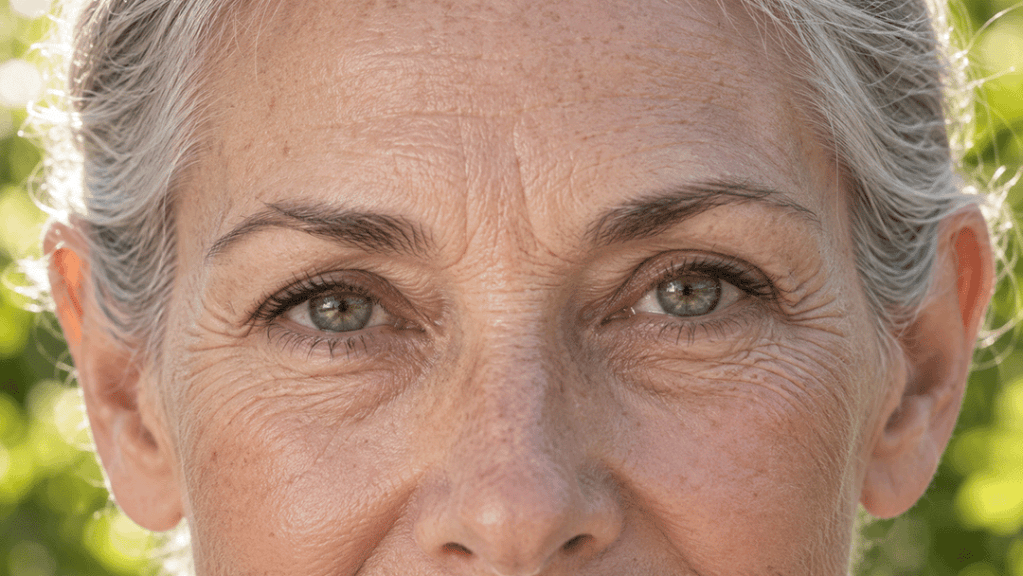
How humans recognize each other.
I’ve reached a point where I not only mistrust the sources of the emails I receive, I literally hesitate to read my email at all. The same is true of social media. A growing majority of what I see and read on the various channels are obviously and completely AI-generated, from the text to the image to the video.
On a surface level, why should I care? I’ve been dealing with spam forever. On a purely logical level, my aversion also doesn’t really make sense. In many cases, the content coming to me via any of those sources could actually be better – more accurate, better written and researched, more balanced, honest and true. The AI systems creating these streams could be a far better author, painter, illustrator, director.
Consuming AI content feels uniquely empty, like I’m listening to a completely monotone conversation. Or a musical piece with no dynamics or inflection. AI can effortlessly create content that satisfies our senses but somehow misses the mark on something deeper.
Imagine an AI saying, via a chat interface:
“I love you”
The hollowness rings like a bell in an empty cathedral. Current LLM-based AIs have no intent, no ability to predict. They are pattern matching machines and their responses are purely statistical. Yann LeCun is fond of saying that the current LLM-based models do not represent the future for this very reason:
“I do not understand how people can even think of building agentic systems that do not have this ability of predicting the consequences of their actions before they do them.”
AIs do not, and will never have, a human soul. That is what I think we detect.
None of this matters if we knew, at all times, what we were dealing with, human or AI, in any digital interaction. If there were some system or agreed upon protocol whereby each “side” declared its provenance prior to any interaction then, well, that would be great. A system like that would help address much of what I’ve been concerned with on this blog. But that ship sailed long ago, and worse, there hasn’t been, and will never be, any direct incentive to build it.
AI pretending to be humans, doing human things, talking like us, appearing like us, acting like us presents so many profitable opportunities it’s virtually impossible to get your head around it. There are no established AI ethics or “morality” other than Asimov’s oft-quoted Three Laws of Robotics.
How do you know, dear reader, that I am not a bot, right now, cranking out this essay at the behest of someone (or something, another Agent?) via some over-used Mac Mini in Detroit? Does my text contain the tell-tale signs of “AI”? Maybe you don’t care.
I do. I know I’m not alone.
Notarism is about human trust, not system trust with its proof-of-humanity, 2FA and passcodes. It’s about look-me-in-the-eye-and-know-that-I-acknowledge-you trust. It’s about that feeling you get when you help someone, hug someone, smile at someone. Notarism’s medium is spacetime and its goal is acknowledgement.
The core of Notarism is proving one’s humanity in the face of endless digital artifice and rapidly growing uncertainty over what it means to be human at all. A Notarist assumes a pseudo-official role as authenticator, and every interaction happens in person, under a known protocol, with the output being nothing more than acknowledgement, and perhaps an artifact that records the moment.
Notarism follows in the footsteps of notable predecessors. A common comparison is Marina Abramović. In 2010 she sat silently at a table in the atrium of MoMA for almost three months while visitors, one at a time, sat down across from her. She looked at each visitor, continuously, until they left. The work was called The Artist Is Present, and it was a powerful and influential artistic statement.
Its title gives away the main difference. The piece centers on the artist, Marina, which is why it cannot be re-performed by anyone else without permission. There is nothing wrong with that. It just points to the fact the “center of gravity” for the work is the artist herself.
Notarists are artists as well but their work is focused on the notaree, i.e. the audience. A Notarist is simply a witness to authentic human action. Whether an artifact gets created during the witnessing is immaterial because it’s unnecessary. Like Marina’s piece, the notaree receives a feeling, of acknowledgement and meaning. But unlike The Artist Is Present, anyone can be the Notarist, and their method of witnessing is entirely their own.
The nearest precedent in method is Tino Sehgal, whose situations exist only while they happen and cannot be photographed or sold. On Kawara painted dates for decades and sent telegrams reading I AM STILL ALIVE. Felix Gonzalez-Torres made stacks of paper people were invited to take from, and he kept nothing. All three put spacetime, memory and humanity ahead of the object.
The notarization concept is ancient. In Rome, notaries (from the Latin notarius) had no authority. What made their action “count” was their witnessing of a human event – court proceedings, speeches, official government acts. That IRL witnessing gradually gained the trappings of officialdom like seals, certificates and a register. Notarism borrows aesthetically from this history and does not hold any type of official capacity.
My Hermosa Beach installation taught me one main lesson. We humans want and need anchors in this emerging, AI-fueled world. No one had trouble understanding what I was talking about. In fact, it was the opposite. What I heard instead was “what can I do to help?”
Unlike other art forms, where the artist creates and the audience receives, Notarism makes the audience the focus, and rewards their simple presence with attention and acknowledgement.
The hero image for this post was generated by AI
 psemme
Leave a comment