
Today, we are asked daily…
Prove that you are a human…
We are captcha-trained.
Select all images with statues.
Soon, these proof-of-humanity tests will need to become much more subtle and complex.
Describe, in single words, only the good things, about your mother.
These tests are meant to establish a root of trust — that you are, in fact, a human being — that the actions you take from this point forward are authentically yours. But we humans are fantastic liars. If a site asks you to upload a photo of yourself, the captcha system won’t detect that you digitally changed your eye color.
AI is an incredible tool for deceit. It can alter or recreate images and videos. It can research, reorganize, and rewrite content. It’s conceivable that someday you will need a way to prove your life history is not a partial or complete fabrication. All existing, traditional, forms of proof will be vulnerable to undetectable alteration. You, or someone else, could easily construct your fake life.
Detecting human authenticity is already a problem. It’s about to get much worse.
Proving > Doing
Last July (2024), Stuart Kirk from the Financial Times wrote an article entitled, “In a fake world, a verification revolution is needed.” In it, he posits that for true verification to succeed, some sort of “proof-of-work” system needs to be established — a way for someone to know, irrefutably, that what they are seeing, holding, hearing, etc. is authentically human-created.
…verification becomes the defining necessity of our age. Welcome to a second-derivative world — where doing it is less important than proving it.
He suggests using proof-of-work processes as a means of verification — some type of audit trail showing, proving, that you performed some action.
Install an always-on camera. Wear a tracker. Musicians can film themselves writing a song, as Taylor Swift does. Unless a novelist releases keystroke metadata alongside their new book, we may assume ChatGPT wrote it.
This article resonated with me. In 2021, I started writing about human authenticity and the emerging deep fake threat. I arrived at similar conclusions as Kirk, but my journey was, and continues to be, quite different.
Whereas Kirk, a financial journalist, addressed the verification issue from a business/technical perspective, treating these new requirements as a necessary evil, my approach was more right-brained. What if we approached the problem as an artist vs a technologist? Instead of proof-of-work, what if we designed creation proofs and made them beautiful — works of art themselves.
What? Bear with me.
The power of witnessing
Historically, when societies have needed a way to discern and prove truth, they have relied on human witnesses.
2 Corinthians 13 1 “Every matter must be established by the testimony of two or three witnesses.”
It’s not a perfect system but it is universally employed. Consider, for example, an official witness type, notaries. For millennia (the ancient Romans started it, or maybe the Egyptians), notaries have fulfilled the need for verification of various kinds. Notaries public today continue to serve a vital legal and administrative role. There are currently over 4 million notaries in the U.S., which underscores the widespread presence and importance of their services.
Notaries witness human actions and confirm their legitimacy and authenticity. A notary public’s role is specific: they verify identity and witness signatures, but they do not notarize the contents of a document — only the authenticity of the signer.
In essence, they are a witness to the process of authentic human signing.
What if we enlarged the role to include the witnessing of any authentic action? The idea is not new. Everything from royal coronations, to military surrenders, to medieval bedding ceremonies have employed the concept. I want to apply it to the scenarios we are discussing here — witnessing in the service of providing provenance and fighting fakes.
What’s needed is a new type of notary — a human whose role is to witness and verify authentic human actions. An existential notary who notarizes meaningfully, expressively, beautifully. A role that goes beyond documentation, creating a lasting artifact of the moment. Witnessing, when done beautifully, turns verification into an art form — one that carries the weight of human presence in an era of artificial everything.
Notarists
I started by giving the old role a new name — Notarist.
A Notarist is an artist who captures the act of creation itself.
A Notarist is an artist whose medium is witnessing. Notarists transform observation into proof.
A Notarist is a human witness who verifies and documents authentic, in-real-life (IRL) human actions. Their methods — observation, measurement, and deduction — are their witness tools. Their documentary output is uniquely their own and can take any form. As artists, they are free to make it simple, complex, outrageous, sublime.
The societal value of this practice may not be immediately obvious, but in that ambiguity lies unexplored creative and philosophical territory.
Every human creation has three elements: conception, birth, and life. A Notarist focuses on birth — the moment an idea becomes real in space and time. The painter painting. The writer writing. The singer singing.
Every creative act is one of a kind and carries its own proof of authenticity. A finished work can be copied, altered, or faked, but its birth is utterly unique, unrepeatable, and irreducible — a work of art.
A Notarist witnesses and documents the act of creation in real time, creating a verifiable record that proves the work was made by human action at a specific moment in time and place.
A creation proof is irrefutable provenance — something AI can’t fabricate and no forgery can replicate.
Artist or Witness?
I can hear you asking: “If witnessing is an art, doesn’t that make notarization subjective? Wouldn’t it turn verification into interpretation?”
This is an important distinction to make. Notarists are not artists in the sense of creative reinterpretation. Their work is not about personal expression — it’s about precision, presence, and trust.
Consider currency design or postage stamps. These are often beautifully crafted by well-known artists, yet their function is purely official.
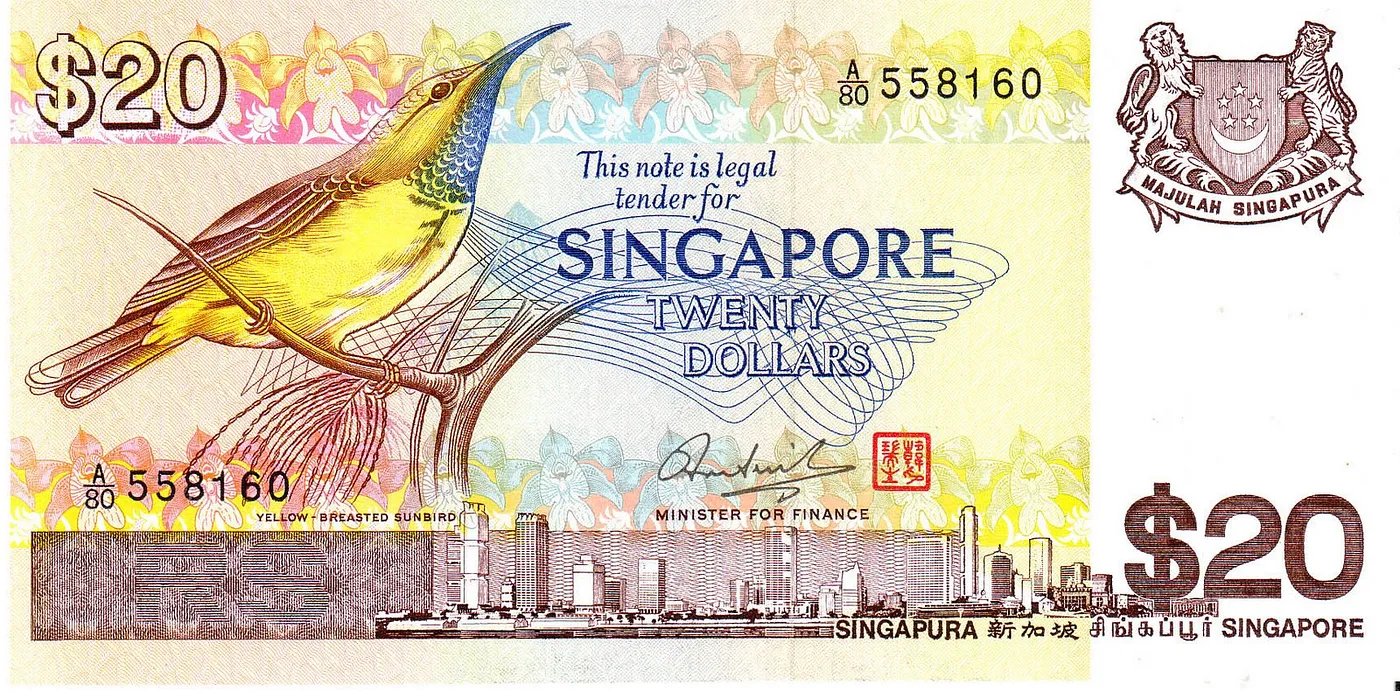
A $100 bill may feature intricate artwork, but no one questions its authenticity because of its aesthetic qualities. Its role is not creative expression — it is a trust instrument, designed to verify value and prevent forgery. The same is true for postage stamps, which may be visually expressive but exist to serve a functional purpose.
Notarists fit into this same space. Their work is intentional, aesthetic, and carefully crafted, but it is not an act of personal interpretation — it is an act of authentication. The process of witnessing may be artistic in its execution, but the end result is not subjective; it is an objective verification of an event, a moment, an act of human creation.
Just as a beautifully designed banknote still serves as unquestionable proof of monetary value, a Notarist’s record is both an artifact and a certification. It may carry the weight of artistic execution, but its core purpose remains unchanged: to establish trust in an era where trust is increasingly under threat.
An example
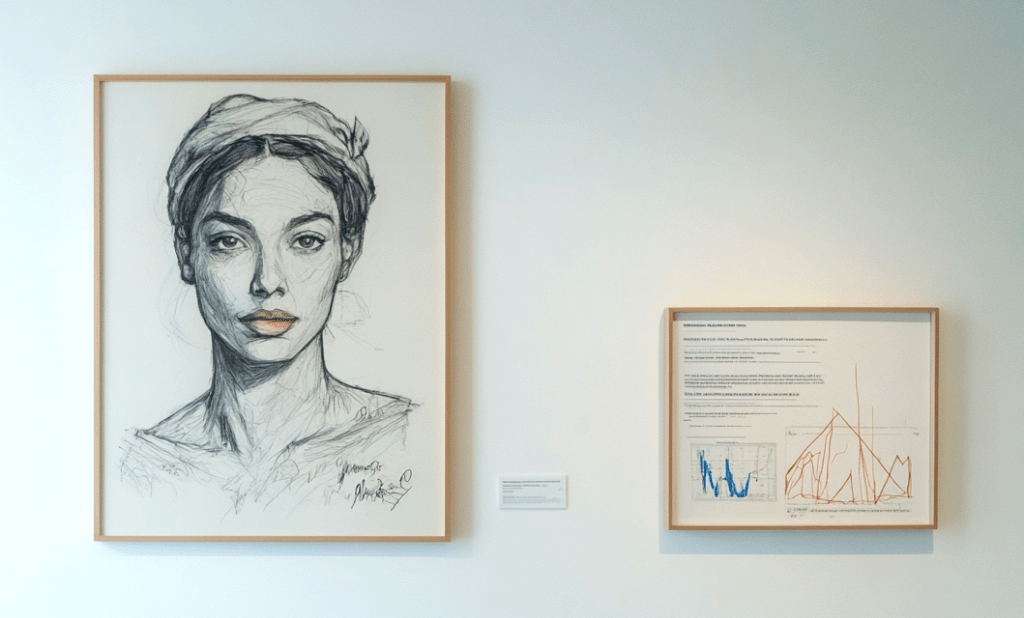
100% fake image – generated by Midjourney
For this hypothetical performance, an artist collaborated with a Notarist to witness, IRL, their drawing of a woman’s portrait. The Notarist’s visual observation of the artist’s physical gestures and movements during the 30-minute session was reinforced by real-time accelerometer and 3D gyroscopic data captured via sensors on the artist’s wrist. The notarization document contains the Notarist ID information, location, date/time plus the sensor data presented as colorful line graphs. Both the drawing and document are displayed side by side on the gallery wall – a notarized artwork.
The documents are independent, though tied together by place and time. The notarization is like the drawing’s fingerprint. A unique, unrepeatable testament to its creation.
It’s interesting to consider that, with enough sensor data, the drawing could be deduced. But that’s a topic for another post.
The notarized document’s aesthetic qualities are where the Notarist’s magic occurs – creating beauty via the simple act of witnessing. Serving more than just a functional role, Notarists co-create something utterly new, in a manner worth exploring deeply.
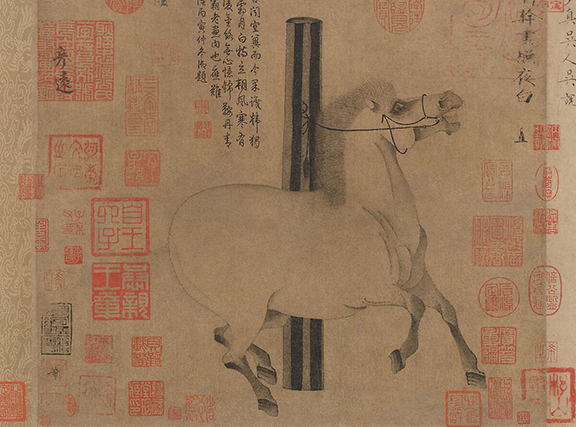
Han Gan – Night-Shining-White
As an interesting aside, during the Tang Dynasty in China (618-907 AD), artworks could be stamped by their owners to prove possession. Over time these stamps and inscriptions became the piece’s provenance. While not related to authenticity, this method of documentation demonstrates how functions normally interpreted as administrative can, in fact, have aesthetic influence as well.
The battle is joined
As I was writing this, I came across an article in The Times, written on February 3, 2025, with this title — “Logo on books will show that the author was human — not AI”. The article discusses how the Author’s Guild had launched an initiative called “Human Authored” that will provide promotional materials authors can use to assure readers their work is “AI free”.
The campaign “isn’t about rejecting technology — it’s about creating transparency, acknowledging the reader’s desire for human connection and celebrating the uniquely human elements of storytelling,” Mary Rasenberger, chief executive of the Authors Guild, said.
The approach has merit but it raises deeper questions — does a logo alone provide real accountability, or is it just a marketing ploy? How real is the readers’ disdain for AI? What if authors use AI for brainstorming story lines? Is that work now tainted?
You will start to see this type of announcement much more frequently as humans grapple with the challenge of maintaining their foothold in a new artifice-infused world.
I won’t claim that Notarists are the ultimate answer — or even the right solution in this case, especially for authors writing long-form works like novels. After all, what writer would want someone sitting beside them, witnessing their process in real-time for weeks on end? But I believe the efforts of Notarists — their experiments, conversations, successes, and failures — will serve as valuable waypoints on the journey to finding better ways to verify human creativity.
My next posts will expand on this introduction and provide further insights into how a Notarist movement could launch, grow and benefit human’s need for truth. We face big questions. Are we prepared to answer them?


 psemme
Leave a comment