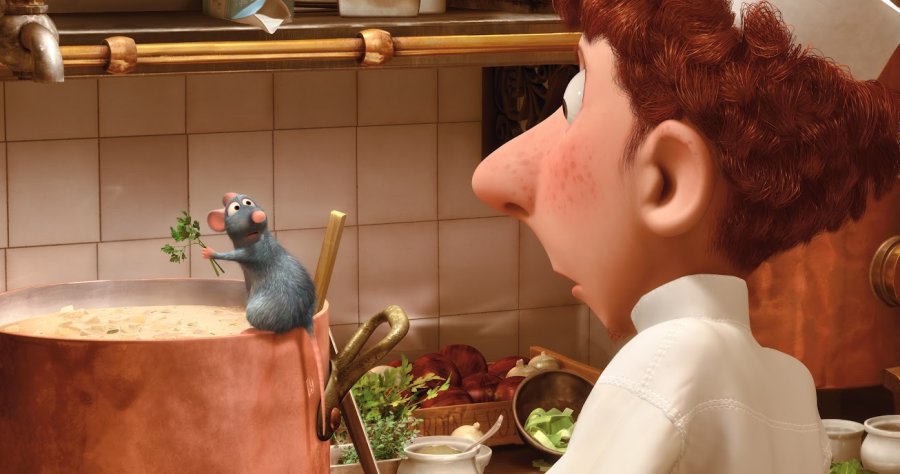
“Anyone can cook…but only the fearless can be great!”
In the 2007 animated movie “Ratatouille”, there is Gusteau, a famous French chef, who writes a cookbook entitled “Anyone can cook!”. In the story, “anyone” includes a rat named Remy and his hapless friend Alfredo Linguini.
I was inspired by the movie, its message, and its iconic quote, so I borrowed it for this post’s title. The same spirit fuels my vision for a human-centered verification movement—a counterpoint to an AI-driven future where nearly everything can be faked.
The concept, which I call Notarism, is built on real-world witnessing of human actions as a means of verification. Those who take on this role are called Notarists, and the focus of this post is that anyone can be a Notarist—a fundamental principle of the entire movement.
I mention this explicitly because Notarists are not officials in any formal capacity. They do not operate under the supervision of the state, like notaries public. They are artists who engage in acts of witnessing to support the process of authentication.
There are no prerequisites or barriers to becoming a Notarist. Just as anyone can become a photographer without formal exams or applications, the same openness applies here.
An illustrative scenario

A prominent NYC gallery hosts a unique “witnessed” artistic performance, inviting an artist to their studio to create a charcoal portrait. Four members of the public are also invited to act as witnesses, Notarists. In preparation for the event, the gallery designs unique, personalized ink stamps for each witness, featuring their name and the event’s date, time, and location. These custom stamps are provided to the participants upon their arrival.
During the drawing session, Notarists are free to sit wherever they choose or move around the artist to observe and witness the drawing process in real time. Once the artist signals that the drawing is complete, the Notarists are instructed to evaluate whether they are confident the artwork was created through genuine human effort. If satisfied, they then approach the easel and apply their individual stamps directly to the drawing.

The result is a notarized work of art – a piece whose value is potentially increased by its authentic, verified human origin.
Recent research has shown that humans instinctively prefer artwork they know was created by people rather than by machines. One study by the University of Oxford found that when viewers were told a painting was AI-generated, their emotional response to it declined significantly, even if they had initially admired it. This suggests that it’s not just the aesthetics of a work that matter—it’s the story, the provenance, and the connection to human effort.
The Notarists in this example performed a very simple notarization. They applied stamps designed by others to a drawing via a one-step process, organized by the gallery. The aesthetic outcome was arbitrary, like the Chinese Han Gan painting I used as an example in my last post. The outcome was sufficient but simple, straightforward, and limited. In this case, the gallery designed the stamps, but any creative path could have been taken. There are no rules or guidelines for how notarizations should be creatively executed or performed.
One could easily argue that adding random stamps to a beautiful drawing diminishes its aesthetic value and impact. However, I believe this presents a rare opportunity. Notarism is, at its core, an art form intended to explore new forms of expression and creativity that merge the roles of artist and witness into a unified philosophical vision. A world where the artistic journey is as important as the destination.
Key points
The above scenario illustrates three crucial facts:
- Becoming a Notarist is open to anyone and does not require any specialized training.
- The role of a Notarist carries significant impact, as their notarizations directly influence the perceived value of the artwork.
- Notarists have the freedom to express themselves in how they choose to perform their notarizations.
It’s not difficult to imagine how this performance could have been enhanced.
Rather than the gallery inviting members of the general public, the artist could choose to involve Notarists renowned for their innovative approaches to creative documentation. Alternatively, the artist could engage in a full-fledged collaboration with a Notarist, transforming the process into a dynamic artistic improvisation between creator and witness—much like a jazz duo.
Calling all Notarists

A natural derivative of the position stated above is “what happens to all these notarizations? If anyone can do it, there could be millions…”
That’s absolutely true and could, in fact, address a common criticism: “this approach will never scale.” This is a topic worth delving into further, and I plan to explore it in greater detail in my next post.
In the meantime, what potential advantages could arise from having “millions of notarizations,” beyond the typical benefits associated with works of art?
I believe the greatest advantages would come from organizing the notarizations within a centralized catalog, allowing anyone to easily search for and access information on notarized artworks, Notarists, transaction histories, and related commentaries.
A blockchain would be an ideal platform for such a catalog, offering an immutable and transparent public record of Notarists’ work while laying the groundwork for future innovation. This approach would also uphold one of Notarism’s fundamental principles—ensuring openness and accessibility for everyone.
Maybe the question to ask is – if millions of notarizations existed in a transparent, decentralized catalog, how else could they be used beyond just authenticating art? What new possibilities emerge when witnessing itself becomes a recorded, searchable, and trusted human act?
 psemme
Leave a comment