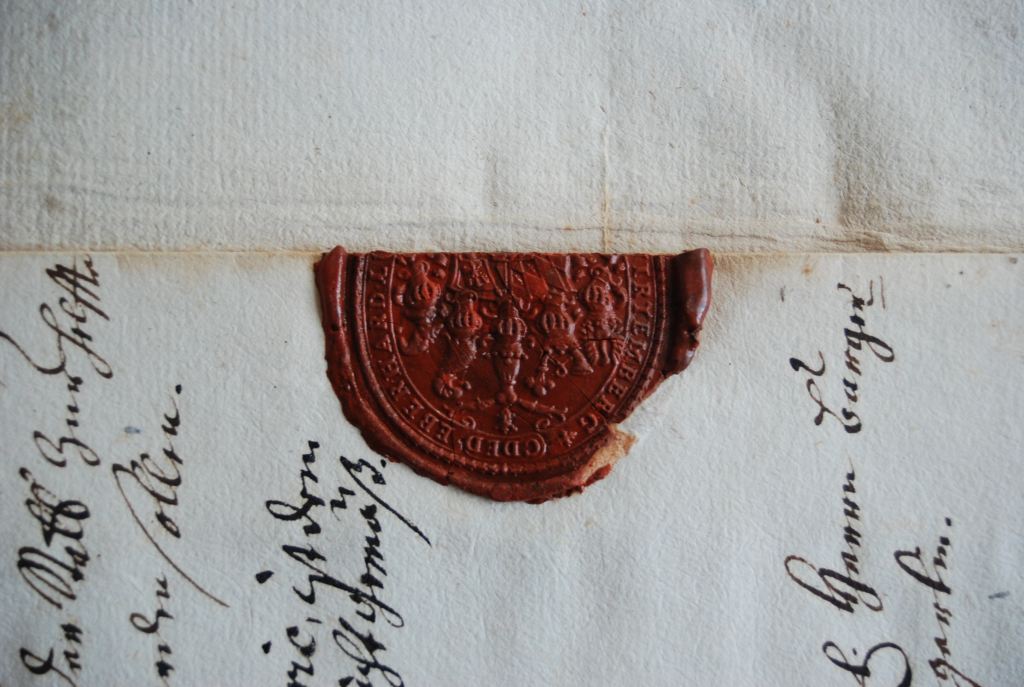
This post introduces the concept of a Notarist.
A Notarist is an artist focused on notarizing acts of creation. As I hope to illustrate, there are both aesthetic and practical implications to this idea. I will present, in the next series of posts, new ways to creatively use data for artistic purposes and also demonstrate how the approach can simultaneously help us face an emerging world where just about anything can/will be faked. In an environment where truth is elusive, Notarists could be helpful roots of trust.
Before I delve into my proposal’s details, let me begin with a brief history of a familiar public officer – the notary public – since it’s clear I have remixed that concept.
The history of notaries public dates back to ancient Rome, where they were referred to as “notarius” and appointed by the government to record official transactions such as contracts, wills, and deeds. Even after the fall of the Roman Empire, notaries continued to be important in legal and commercial transactions in Europe, often serving as scribes during the Middle Ages.
In the United States, notaries public were first established in colonial Virginia and Massachusetts in the 1600s, and after the United States gained independence, were established in all states and territories. Today, notaries public are appointed by state governments and have various roles such as verifying identities, certifying signatures, and attesting to the validity of legal documents, contributing to the prevention of fraud and ensuring the integrity of legal transactions.
Until recently, a notary public required the physical presence, in the same location (called the venue), of all involved parties. This was required to ensure the notary actually affirmed, via their own senses (eyes and ears), that what was being represented as true, was in fact, the truth.
This is noteworthy. Our legal system has concluded that a human, acting under human principles of ethics and fairness, and using subjective observation, can offer what is considered an objective truth – that a non-fake actor has, in fact, executed a non-fake action. Even though humans are error prone and corruptible, the process of humans witnessing, and affirming, the actions of other humans doing something is an accepted form of verification worldwide, and has been for millennia.
It would seem that in our emerging world of fake everything, services like those offered by notaries public could be invaluable. The issue is, a notary’s current, official purview falls far short of what would be required to be truly useful in this new environment.
Essentially a notary’s responsibilities must be enlarged to include witnessing not just simple functions but actual time-based events at specific locations.
My interest in new forms of time and measurement centric artforms led me to this point. A creation proof is primarily an aesthetic activity. Last year, in this post I mentioned that the issue of authenticity appears when anything is done in the name of “truth”. How do you know I’m being honest? This is when my research of notaries public began. I coined the term “existential notary”, or a human “official” who will acknowledge and affirm that you are, in fact, a human and do, in fact, exist. But unlike other documents that arguably achieve the same end, e.g. passports, driver’s license etc, an existential notary will also verify and certify your existence at a very specific space-time. They may also include additional measurements to further quantify the qualities of your presence in front of them.
This all flowed naturally from my creative interests. The practical dimensions of the approach became more urgent during the past few weeks as the world suddenly became enamored with AI systems such as ChatGPT and Midjourney. Overnight everyone realized that systems like these could introduce the concept of “artificial” into every aspect of our lives. In some cases this could be helpful, but in others, deeply troubling, disruptive and dangerous. How do we humans find a way to ground ourselves in reality when the world around us becomes increasingly unreal or worse, intentionally deceptive?
My concept of the Notarist was woven from both these threads – separate but related – a space-time artist whose craft has the practical benefit of affirming the existence and authenticity of humans, their actions and activities. The core concept is not new. As I mentioned earlier, notaries public were historically used to certify/validate/document time-based events, e.g. a speech. The humanity of the speaker, however, was never in question. We need a new version of this trusted role.
Are Notarists really just Blade Runners by another name – human watchdogs on the lookout for dangerous AI imposters? I can understand the analogy but that’s certainly not the intent. My goal is help us establish and maintain control of authentic roots of trust, based on a system we’ve successfully used for thousands of years.
I also want to explore what I believe are promising new artistic directions.
My next posts will layout some scenarios that will, hopefully, bring to life what is admittedly still very conceptual.
Photo by David Nitschke on Unsplash
 psemme
Leave a comment